Table of Contents
Introduction
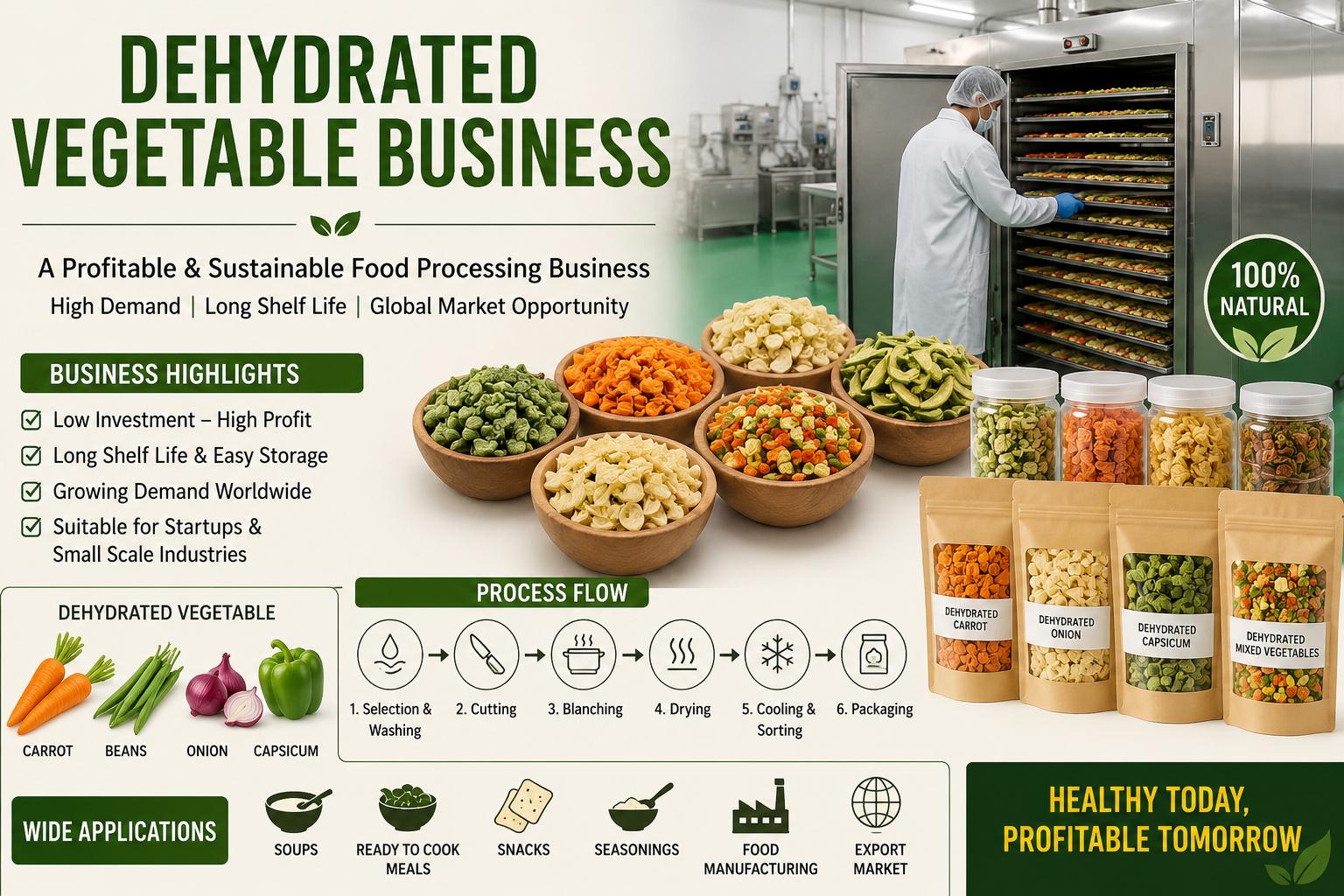
The dehydrated vegetables business is a rapidly growing business in the global food processing industry. Food manufacturers and emergency food suppliers look for long shelf-life, lightweight, and nutrient-preserving food products, dehydrated vegetables have become an ideal solution.
What Is the Dehydrated Vegetables Business?
The dehydrated vegetables means removing moisture from fresh vegetables using controlled drying techniques to increase shelf life while retaining flavour and nutritional value.
Global Market Demand for Dehydrated Vegetables
- Growth of ready-to-eat and instant food products
- Demand from hotels, airlines, and catering services
- Use in soups, seasonings, and snack manufacturing
- Rising interest in long-shelf-life and emergency foods
Types of Dehydrated Vegetable Products
- Onion flakes and powder
- Garlic flakes and powder
- Tomato powder
- Carrot, beetroot, cabbage
- Spinach and leafy greens
Value-Added Products
- Vegetable powder blends
- Soup mixes and seasoning bases
- Dehydrated vegetable snacks
Investment and Startup Cost
Small-Scale Setup
- Tray dryers or solar dryers
- Basic slicing and cleaning equipment
- Simple packaging tools
- Continuous or freeze-drying machines
- Quality testing and moisture control systems
- Advanced packaging and storage facilities
Profit Margin and Income Potential
Profitability depends on:
- Raw vegetable sourcing cost
- Drying efficiency and yield
- Product type and market positioning
- Basic dehydrated vegetables: 25%–40%
- Powdered and blended products: 35%–55%
- Export-quality products: Higher margins
Legal and Food Safety Requirements
While regulations vary globally, common requirements include:
- Food business registration or license
- Compliance with food safety standards
- Proper labeling and ingredient disclosure
- Export certifications for international markets
Marketing and Sales Strategy
Offline Channels
- Wholesale food ingredient markets
- Food manufacturers and processors
- Hotels, restaurants, and caterers
Online and Export Channels
- E-commerce platforms
- B2B export portals
- Direct contracts with food brands
- Digital marketing and content SEO
Growth and Expansion Opportunities
The dehydrated vegetables business can expand into:
- Organic dehydrated vegetables
- Freeze-dried premium products
- Ready-to-use cooking mixes
- Export-oriented food ingredient brands
With rising global food security needs, long-term growth potential is strong.
