Introduction
The vegetable powder business is an emerging and high-growth food business in the global food processing and health foods industry. As consumers increasingly seek convenient, long-shelf-life, and nutrient-rich food ingredients, vegetable powders are gaining popularity in households, food manufacturing, nutraceuticals, and wellness products.
What Is the Vegetable Powder Business?
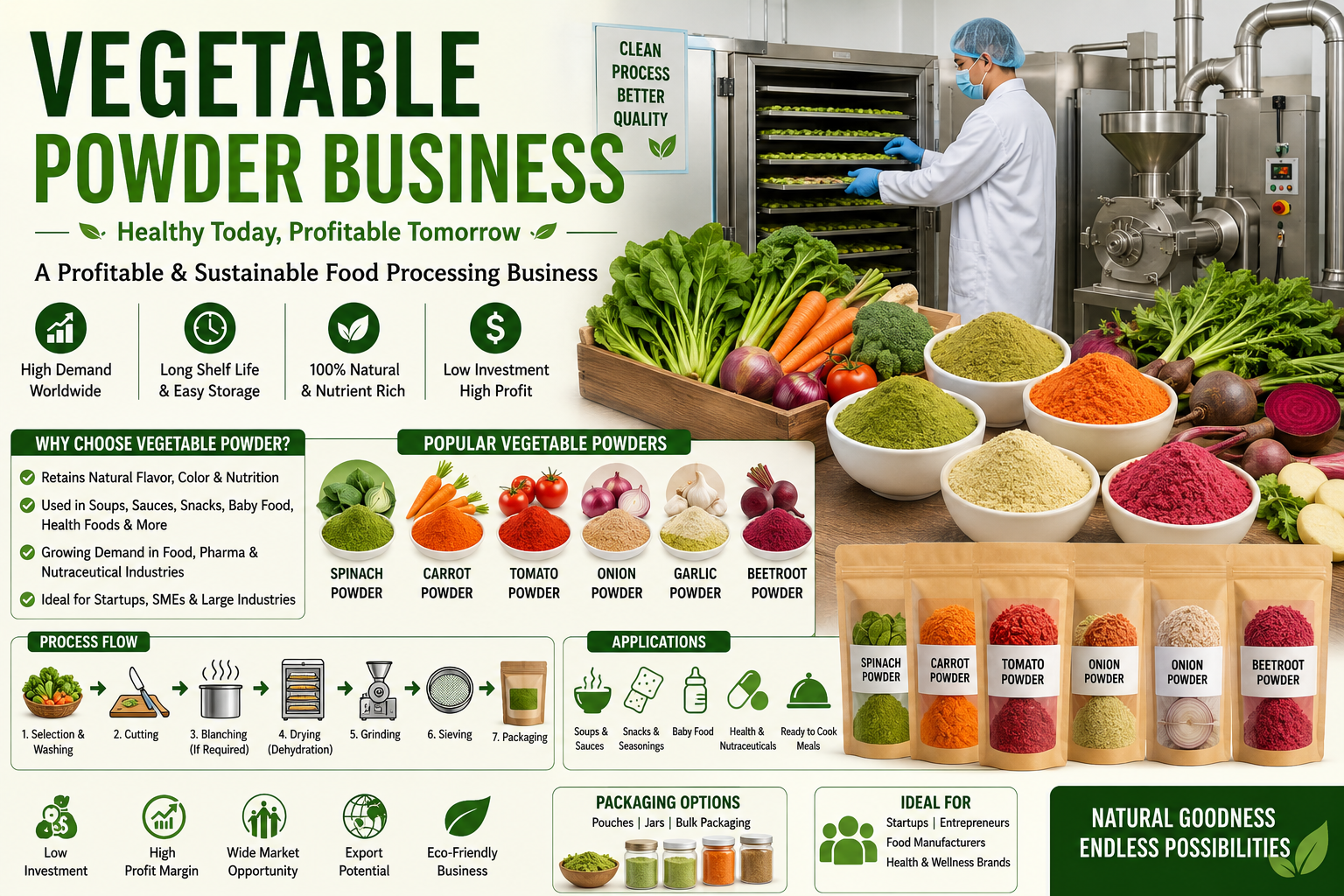
The vegetable powder business involves processing fresh vegetables into fine powders through controlled drying and grinding methods. These powders retain much of the vegetable’s natural flavor, color, and nutrients while offering extended shelf life and ease of use.
Global Market Demand for Vegetable Powders
Vegetable powders are used across many sectors.
Key Demand
- Growth of health-conscious and functional food markets
- Use in soups, sauces, snacks, and bakery products
- Demand from nutraceutical and supplement industries
- Preference for natural coloring and flavoring agents
Types of Vegetable Powders
A wide variety of vegetables can be processed into powders.
Common Vegetable Powders
- Onion powder
- Garlic powder
- Tomato powder
- Spinach powder
- Carrot powder
- Beetroot powder
Investment and Startup Cost
The investment required for a vegetable powder business depends on scale and technology.
Small-Scale Setup
- Vegetable washing and slicing equipment
- Dehydrators or dryers
- Grinding and sieving machines
- Basic packaging tools
- Continuous or freeze dryers
- Automated grinding and blending units
- Quality testing and moisture control systems
Profit Margin and Income Potential
Average Profit Margins
- Basic vegetable powders: 30%–45%
- Blended and organic powders: 40%–60%
- Export-grade products: Higher margins
Reduced wastage significantly improves overall returns.
Legal and Food Safety Requirements
Although regulations vary globally, common requirements include:
- Food business registration or license
- Compliance with food safety standards
- Nutritional and ingredient labeling
- Export certifications (if applicable)
Always follow local and international food regulations.
Marketing and Sales Strategy
Offline Sales Channels
- Wholesale ingredient markets
- Health food stores
- Food processing companies
Online and Export Channels
- E-commerce platforms
- B2B marketplaces
- Direct contracts with manufacturers
- Content marketing and SEO
